
Views: 0 Author: Site Editor Publish Time: 2026-06-19 Origin: Site


You just heard the dreaded crunch of plastic against a concrete pillar. Now you face an immediate dilemma. Do you need an urgent shop visit? Can you safely postpone the fix? Modern vehicles utilize highly complex safety systems. They are not just cosmetic plastic covers. Damage frequently goes much deeper than surface scratches. A cracked shell often hides compromised sensors. It can also conceal weakened structural supports. This article provides an evidence-based framework for evaluating damage severity. We explore the legal and safety risks involved. You will learn to distinguish between minor scrapes and dangerous structural failures. By understanding these key factors, you can make informed, cost-effective repair decisions. We will guide you through triage steps and professional repair criteria. You will gain clarity on handling insurance complications. Our goal is ensuring your vehicle remains fully safe for the road.
Safety first: Driving with a cracked bumper is only safe if the underlying structural integrity (impact bar and foam) is intact and no parts are loose.
Hidden technology: Even minor exterior cracks can conceal damaged Advanced Driver Assistance Systems (ADAS) and parking sensors.
Legal risks: Dangling parts, exposed sharp edges, or obstructed lights can result in traffic citations and voided insurance coverage.
Decision rule: Hairline cracks may be repairable, but deep fractures, broken mounting tabs, or compromised sensors require full replacement.
Assessing your vehicle's roadworthiness post-impact is critically important. You must quickly determine if driving home poses an immediate danger. The moments following a collision require clear judgment. Structural integrity often dictates your next move. Do not rush this assessment phase.
Highway speeds severely stress damaged automotive plastics. Wind shear catches loose sections effortlessly. A minor fracture can rapidly evolve into a massive tear. The plastic shell could detach entirely at high speeds. This creates a severe debris hazard for other drivers. It also exposes your vehicle's sensitive front-end components to direct impact. Understanding aerodynamics helps you grasp this risk. Air pushes relentlessly against the front fascia. Any gap or crack disrupts this airflow. The resulting turbulence rips weakened mounting tabs apart.
You also face strict compliance checks on public roads. Local Department of Transportation (DOT) standards heavily regulate vehicle safety. Exposed sharp edges violate these baseline regulations. Law enforcement officers actively look for these hazards. Broken plastic interfering with headlights will trigger "fix-it" tickets. Turn signals must remain clearly visible from specific distances. Obstructed license plates also invite unwanted police attention. A quick visual check saves you from unnecessary legal trouble.
We highly recommend the "pull test" as a practical baseline check. It offers a skeptical-friendly method for verifying mounting stability. Approach the damaged area cautiously. Grab the plastic near the fracture point. Give it a firm, steady tug. Does the entire assembly wobble significantly? Do you hear retaining clips popping? If the shell feels loose, do not drive the vehicle. Your internal bumper brackets might be sheared off. Call a tow truck instead. Safety always supersedes convenience.
Demystifying modern impact systems helps you evaluate damage accurately. Many drivers mistakenly fall for the plastic cover illusion. They assume the painted exterior serves as the primary safety device. This misconception leads to dangerous driving decisions.
In reality, the outer fascia acts merely as a cosmetic shell. The true energy-absorbing components lie hidden underneath. These include the internal metal rebar and the dense foam absorber. When you damage your automotive bumper, you risk compromising these hidden structural layers. The foam crush blocks dissipate kinetic energy during a crash. The metal reinforcement bar prevents cabin intrusion. A cracked exterior often signals damage to these vital core elements.
Modern vehicles rely heavily on a complex, hidden technology matrix. A cracked cover frequently misaligns crucial safety hardware. It can easily throw off blind-spot monitors and radar sensors. Backup cameras also suffer from slight structural shifts. Even a millimeter of misalignment degrades your active safety systems. Your automatic emergency braking might trigger late. Your adaptive cruise control could misread the distance to the car ahead. These technological failures present invisible dangers.
How do you accurately judge the exterior fracture? You must analyze the depth and location of the crack. Surface-level scrapes generally pose a low immediate risk. Hairline fractures rarely threaten structural stability. However, penetrating cracks demand your immediate attention. If the crack is wider than a coin, you face a high structural risk. Fractures extending to edges strongly signal internal mounting failure.
Damage Type | Visual Characteristics | Immediate Risk Level |
|---|---|---|
Hairline Scuff | Paint transfer, very shallow scratching, no structural gap. | Low |
Surface Crack | Visible split in plastic, does not penetrate fully to the back. | Moderate |
Penetrating Crack | Crack wider than a coin, visible gaps exposing internal foam. | High |
Edge/Mounting Failure | Cracks reaching panel seams, sagging plastic, exposed hardware. | Critical |
"Doing nothing" often seems like the cheapest initial route. You might want to delay the repair to save cash. However, ignoring the issue usually translates into a poor financial decision. Small problems compound into major repair bills over time.
Compromised crash safety ranks as your highest risk. Consider the mechanics of a secondary vehicle impact. Your vehicle's underlying foam might already be crushed from the first collision. The plastic tension holding the structure together is broken. Therefore, the assembly will fail to absorb a future impact. This transfers the massive crash force directly to the chassis. It endangers passengers and increases the risk of severe whiplash. Your vehicle's crumple zones cannot function correctly without proper energy dissipation.
Weather intrusion creates another highly expensive headache. Unsealed cracks easily allow water and road salt inside. Debris bypasses the protective fascia. Moisture eventually reaches sensitive electrical wiring harnesses. This leads directly to electrical shorts in parking sensors. Unchecked salt exposure causes rapid, severe rust on the metal subframe. Corrosion weakens the crash bar, rendering it structurally unsound.
Finally, you face significant and complex insurance complications. Ignoring structural damage heavily risks denied claims in the future. Suppose a secondary accident occurs a few months later. The claims adjuster inspects the vehicle thoroughly. If the insurer discovers pre-existing, unaddressed issues, they may deny coverage. They will argue the prior damage worsened the recent collision. Fixing the damage early legally protects both your safety and your wallet.
Choosing the right corrective action requires highly objective criteria. You need to understand when a quick fix suffices. You also need to know when you must start fresh. Auto body technicians use specific guidelines to determine the safest route.
Plastic welding and specialized structural adhesives work well in specific scenarios. Technicians melt matching plastic into the crack to fuse it securely.
Small, localized cracks located far from stress points.
Damage not located near edges, mounting clips, or sensor mounts.
Cosmetic-only damage confirmed by a professional bumper teardown.
Conversely, certain types of severe damage make replacement absolutely mandatory. Safety regulations strictly prohibit repairing compromised structural components.
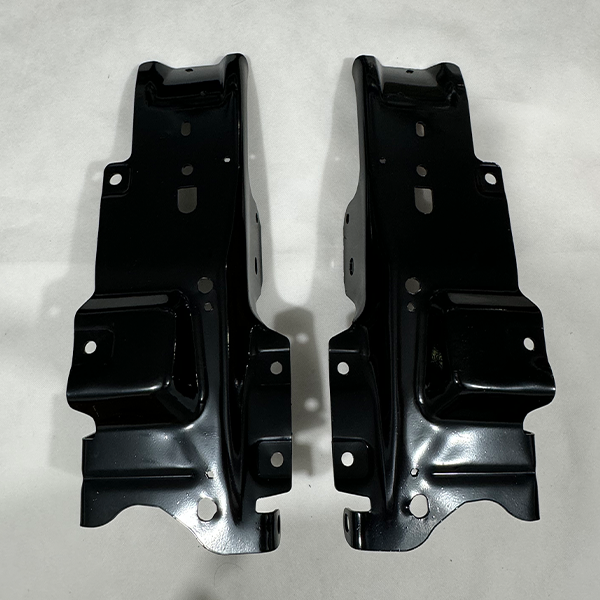
Broken or stressed mounting tabs: You cannot safely re-glue primary structural attachment points. Vibration will break the glue over time.
Structural intersections: Cracks crossing structural reinforcement lines compromise the entire shell's rigidity. The panel will buckle under pressure.
ADAS recalibration rules: Many manufacturers strictly prohibit repairing plastic over radar units. Filler materials block radar waves.
Once you decide to replace your car bumper, you must navigate the parts market. You will choose between OEM and aftermarket options. Original Equipment Manufacturer (OEM) parts guarantee exact factory fitment. They ensure complete safety compliance and exact sensor alignment. They also help maintain your vehicle's optimal resale value. High-quality aftermarket options can save you significant money upfront. However, they may require extra labor hours to fit perfectly. Always verify safety certifications before choosing an aftermarket replacement part.
You must move from visual evaluation to decisive execution. Securing your vehicle's safety requires professional intervention. DIY methods only take you so far in the assessment phase.
Do not rely solely on a visual DIY inspection. A definitive safety check requires removing the outer fascia completely. Technicians must visually inspect the underlying crash bar. They check the crush zones and wiring harnesses for hidden trauma. Hidden damage frequently lurks entirely out of sight. A slightly bent bracket can render an airbag deployment ineffective.
Finding a highly reliable repair partner is critical. When shortlisting a body shop, ask the right questions. You need to gauge their technical expertise and transparency.
Do they possess the correct ADAS recalibration equipment in-house?
Do they provide transparent teardown documentation, including photos of internal damage?
Do they offer lifetime warranties covering paint matching and structural integrity?
A trustworthy collision center will happily answer these questions. They prioritize your long-term safety over a quick turnaround. Always demand clear, written communication throughout the repair process. Ask to see the teardown photos before authorizing the final repair work.
Your vehicle remains physically drivable with minor cosmetic cracks. However, the hidden risks to sensors make long-term neglect a serious liability. Driving around with compromised structural safety endangers you and your passengers. A weakened impact system cannot protect you during a secondary collision. We highly encourage scheduling a professional diagnostic teardown immediately. Relying strictly on surface-level visual assumptions often leads to disastrous outcomes.
Take these actionable next steps today:
Perform the physical pull test to verify immediate structural stability.
Document all exterior damage using clear photos for your insurance records.
Book a professional teardown inspection at a certified collision repair center.
Request a written estimate detailing OEM versus aftermarket replacement options.
A: Duct tape is strictly for low-speed transit to a body shop. It is not a permanent fix. It will not withstand highway speeds or significant wind shear. Relying on tape for daily driving creates a severe safety hazard and risks a traffic citation.
A: Yes, it often will. State and regional rules strictly prohibit exposed sharp edges. If the plastic is not securely attached, inspectors will fail the vehicle. Obstructed lights or sensors also guarantee an inspection failure in most jurisdictions.
A: You must weigh the repair cost against the vehicle's total value. Minor cosmetic cracks on older cars might not warrant expensive fixes. However, if the crack compromises safety sensors or mounting points, repair is essential regardless of the car's age.
A: Costs vary widely. A simple plastic patch and repaint might range from $200 to $400. Full OEM replacement, including labor, paint, and required ADAS sensor calibration, can easily exceed $1,500. Always request a detailed estimate after a professional teardown.


